Why fig? Well I wanted to place a deciduous tree in Tim's yard to add a tree layer, and help shade in the summer. An edible, hardy plant with a unique pollination story seemed perfect. Over time I wish to develop a water-wise fig guild, which means plants adapted to a Mediterranean climate, with minimal summer irrigation needs. I already have some of these types of plants in the yard, which I might be able to propagate from: borage, cardoon, lavender, lupine, oregano, rosemary, sage, thyme and yarrow. If Tim is up for it, we can introduce more from this category.
This summer I attended an "Introduction to Forest Forests" class at the Community Orchard of West Seattle, taught by two permaculture instructors. They provided handouts, including one about developing fruit tree guilds. Using this handout, and also
Gaia's Garden I wanted to feature some of the plants in my garden right now, that can serve in the role of Fig Tree Guild. In the true spirit of permaculture, I am starting with what I already have on the land: blueberry, cardoon, cilantro, daffodil, echinacaea, garlic, marigold, oregano, strawberry, tomato, yarrow, and of course - the fig. If you check out the works cited down below, make sure to visit [#1] where you will find more information about fig guilds.
Ficus carica 'Olympian' (MORACEAE)
Common Fig.
Deciduous small tree up to 30 feet, can be single or multi-stemmed, prone to suckering [1]. Although considered a Mediterranean plant, several cultivars are hardy to Zone 5 [1]. The leaf is alternate, simple, lobed, with venation that is palmate-pinnate. Flowers are monoecious and self-fertile [3], and have a very unique story: flowers are technically an inflorescence surrounded by a fleshy covering we know as the fig fruit. They are pollinated by female wasps (Agaonidae) that enter at the base of the fig, pollinate, then die! Eggs laid inside the fig hatch; the males mate with females, and wingless, eventually die inside the fig too [2]! The females are able to emerge, and pollen-loaded, go off to pollinate a new fig [2]! The mature fruits mostly contain carbohydrates, but also contain small amounts of protein and fat, calcium, phosphorus, iron, sodium, potassium, Vitamin A, C, B1, B2 and B3 [3]. The plant can also serve medicinally: a decoction of the leaves can be used as a stomachic [3]. The latex in the stems can be analgesic to insect/bee stings [3]! The fruit is mildly laxative, demulcent and digestive, and is taken in the form of a syrup [3]. The fig is said to have anti-cancer properties too [3]. This plant is truly special!
Mulch Makers
Cynara cardunculus (ASTERACEAE)
Cardoon.

Herbaceous perennial, 3' x 6', upright, columnar, arching in a vase-shaped frame, showy; hardy to Zone 7 [4]. The leaves are large, simple, boldly jagged, lobed, deeply cut, spined with fine hairs, and silver-gray [4] -- and make a great mulch! The stem is edible (celery-like stalk), and reportedly tastes better before flowering / after blanching (to remove bitterness) [5]. The roots, too, can be cooked like parsnips (only if you have plants to spare!) [5].The flowers are hermaphrodite; pollinated by bees and wasps [5]. They are also edible, with a milder flavor compared to globe artichoke. The flowers are gorgeous! Purple-violet, large, globose, spined, and technically called a pseudanthium - an inflorescence of thousands of flowers grouped together on one flower structure. The flowers will produce one seed per "cypsela", that are very small, so more appropriate for the birds [6]. If you don't want to eat them, however, the dried flowers can be used as a rennet substitute [5]! Medicinally, the plant contains "cynarin", a bitter, which improves liver and digestive function, or treats progressive diseases like hepatitis, arterioschlerosis and early stages of diabetes [5]. At a recent workshop I attended about bitters at the Dandelion Seed Conference, I was told
Cynara is considered safe for regular use as a bitter.
Nutrient Accumulators
Achillea millefolium (ASTERACEAE)
Yarrow.

A beautiful, upright -slightly weedy- perennial that is hardy to Zone 2 [7]. Leaves are soft, feathery, bipinnate-tripinnate, arranged spirally on the stem. Being rhizomatous, it can make a pleasant groundcover (if the flower stalks are cut back regularly). It also has a deep taproot that is known for accumulating nutrients from sub soil layers [8] -- if then turned into mulch or compost. The flowers are a stunning inflorescence of bracts, as well as ray and disk flowers, creating a flat-topped structure also called a " ". They are hermaphrodite, are pollinated by insects and also attract wildlife [7]. The flowers eventually produce cypselae that ripen in late summer [7]. Yarrow is highly adored for it's medicinal properties, and is popular for it's ancient use of treating wounded soldiers, even during the American Civil War [9]. It is used today for treating wounds, stopping blood flow, treating colds, menstrual pain and kidney disease [7]. Yarrow also contains the anti-inflammatory
azulene [7]. From a permaculture standpoint, this plant can fit into many categories because it is also aromatic (like chrysanthemum), repels pests (like beetles, ants and flies [7]) and attracts predators -- therefore it is highly functional -- if properly managed. It is one of my favorite flowers and herbal medicines!
Soil Fumigants/Aromatics
Calendula officinalis (ASTERACEAE)
Pot Marigold.
Annual, herb, hardy to Zone 2, upright, self-seeding, and can get a little weedy. The leaf type varies among cultivars: are simple, alternate, hairy, and can be lanceolate with pinnate venation, or oblong-obovate, or oddly-pinnate (pictured above) with entire or dentate margins. The flowers are cheery bright yellow to deep orange ray & disk single flowerheads with single or double petals [12]. They are monoecious, are pollinated by bees, and attract wildlife [13]. Marigolds will produce an abundance of "achenes", and have a short life cycle. For edibility, the leaves are actually used as salad greens--however they left a tingling sensation in my own mouth--they are considered rich in vitamins and minerals like dandelion leaves [13]. The seeds contain up to 37% protein and 46% oil [13] and calendula seed oil is a common product available in herbal medicine stores. Calendula is a well loved medicinal plant, especially when applied externally for skin conditions such as wounds, burns and varicose veins [13] therefore it is a common ingredient in lotions and creams you can buy from the store. It can also be taken internally (flower petals) as an antiseptic, treating conditions such as chronic infection and for toning the circulatory system [13]. In the "soil fumigant" category, marigolds function as an insect deterrent and are known for reducing eelworm populations [13]. As an aromatic, marigolds attract hoverflies, bees, and butterflies [13]. They also attract gardeners like me who otherwise might feel unmotivated to do weeding!
Origanum vulgare (LAMIACEAE)
Pot Oregano.
Herbaceous perennial, upright, sometimes rhizometous, horizontal and spreading, hardy to Zone 4 [14]. Being in the mint family, it has square stems; the leaves are arranged opposite, rounded-ovate, with margins entire or slightly toothed [14]. The flowers are also characteristic of the mint family with bilateral symmetry, 5 petals fused into a cup, two-lipped, pink-purple-white, with four (4) stamens and four (4) purple bracts, that bloom in corymb-like spikelets [14]. The flowers are hermaphrodite, pollinated by bees, butterflies and moths, and attract wildlife [15]. If left to self-seed, oregano produces achenes [14]. An excellent culinary herb, oregano contains a bit of fat and protein, and mostly carbohydrate [15]. It contains the minerals calcium, phosphorus, iron, potassium, also an unusually high amount of magnesium and a bit of zinc [15]. For vitamins it contains a high amount of Vitamin A, and a bit of B3 [15]. Medicinally, Oregano Oil has a great reputation for being antiseptic, diaphoretic, expectorant and so it is taken for colds and flu [15]. It's antiseptic qualities are attributed to the active constituent thymol [15]. In the garden oregano smells delightful, repels pests and as a groundcover can be multi-functional [15]. I've never tried making my own essential oil but I definitely use it if I am starting to feel a bit under the weather, as a preventative tool.
Solanum lycopersicum (SOLANACEAE)
Tomato.

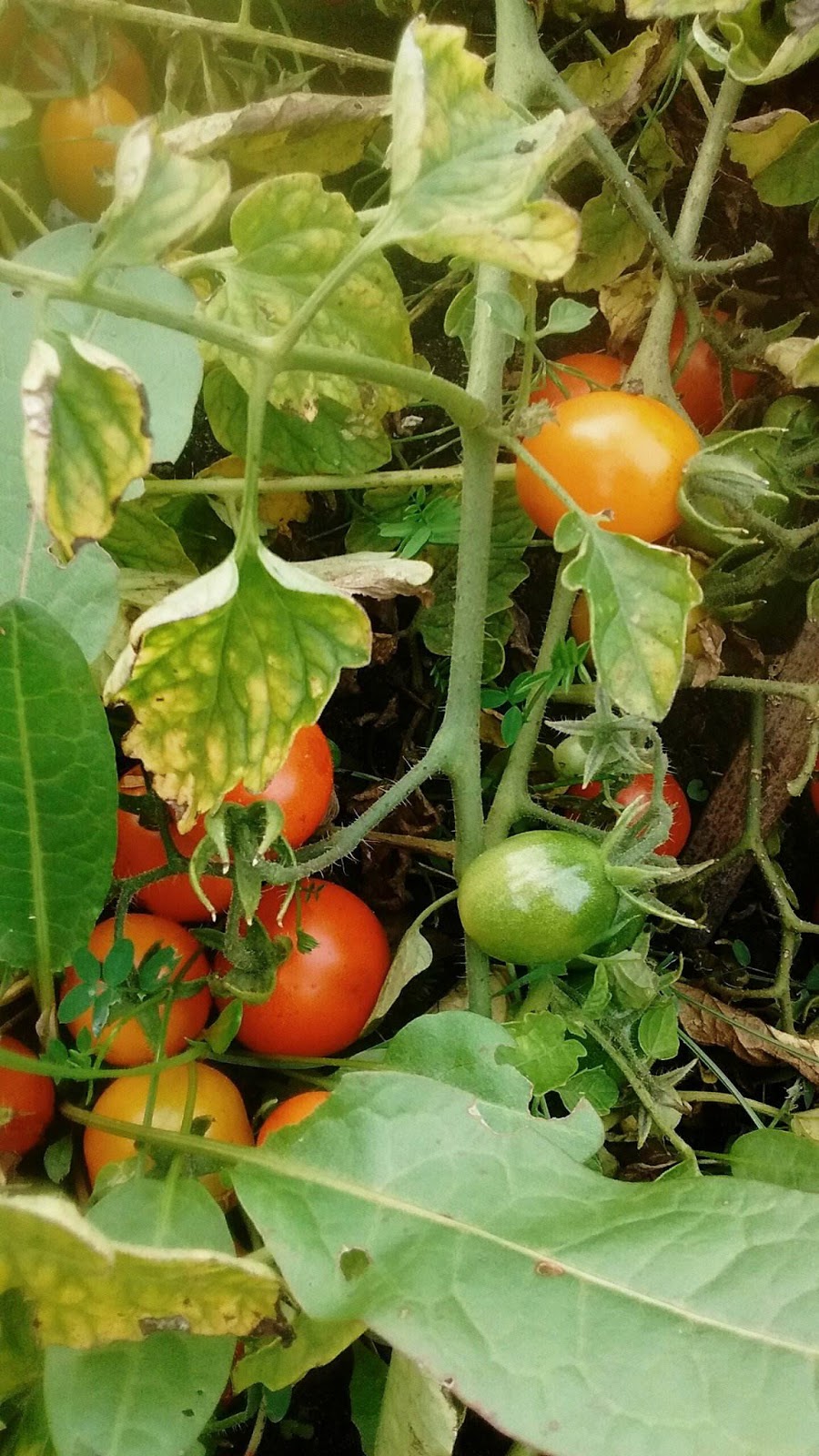
Dicot, annual in temperate climates, vines with pubescent stems, sprawling (unless staked), especially if it's an "indeterminate" variety" (vs. determinate which is bushy) [16]. Leaves are compound, oddly pinnate, with 5-9 leaflets, and the flowers are yellow cymes, which are pollinated by insects [16]. The fruits are true berries (thin skin and pericarp), and seeds can be saved by a simple fermentation and drying process [16]. Tomatoes are an obvious culinary delight, although some people have an allergy to nightshades (their family). Instead I will focus on their medicinal qualities. Sliced fruits are considered an easy First Aid treatment on burns [16] (squash and rub a tomato on yourself, that sounds fun). Their main active ingredient is Lycopene, which supports heart and prostate health [16]. That is probably nice news for men! Oil obtained from the seed can be used in soap making [16]. Which may explain why it can be used as an insecticide, effective against ants, yet is also harmful to beneficials and humans [16]. As a growing plant it can function as a fumigant, and is said to be a companion to asaparagus, parsley, brassicas (mixed opinion), nettles and gooseberries [16]. Even though I am not a huge fan of eating tomatoes myself, I think they will fit in quite nicely to the Fig Guild -- especially if I install nettles and gooseberries!
Attract Predators/Beneficials
Coriandrum sativum (APIACEAE)
Cilantro/Coriander.

Herbaceous, annual, hardy to Zone 2 grows in a basal clump until it goes to seed and the flower stalks are several feet high, upright [24]. Leaves are delicate, aromatic, broadly-lobed becoming more feathery up the flower stem [24]. White or pale pink umbel flowers are very attractive to pollinators including swallowtail butterflies [24]. The flowers are hermaphrodite and the plant is self-fertile [25]. Each flower eventually produces a schizocarp, which is the very popular culinary spice, coriander! The seed is reportedly more flavorful when allowed to fully cure [25]. The seed can also yield an essential oil and is used in perfumery and soap making -- because it is said to be an aphrodisiac [25]. Medicinally, the seeds especially are carminative and digestive -- the raw seeds can be chewed to stimulate gastric juices, yet too many can have a narcotic effect [25]. It apparently freshens the breath though, and is a good follow-up to eating raw garlic [25]! In the garden, essential oil can be used in spray formulations, and coriander is fungicidal and bactericidal, especially if used on red spider mites and woolly aphids [25]. The growing plant is said to repel aphids and carrot root fly [25], so this plant can also be placed in the soil fumigant/aromatic category. Personally, cilantro is probably my favorite fresh kitchen herb; I love to add it to salads, and I love the soft touch of the leaves. However, apparently the leaves should not be eaten in large quantities due to higher levels of oxalic acid (0.012%) [25]. Everything in moderation of course; this plant seems like a good metaphor for that idea.
Echinacea purpurea (ASTERACEAE)
Coneflower.

Herbaceous perennial, hardy to Zone 3, leaves form a basal clump, the flowers are upright and a few feet tall [26]. Leaves are simple, alternate, ovate-lanceolate, dark green with red-tinged petioles [27]. Flowers are solitary, ray and disk, with 50-300 disk flowers [27], and called "cone-shaped" because the petals reflex downward as they are opening. They are hermaphrodite and pollinated by insects [28]. If the spent flower heads are not removed they provide seeds for overwintering birds like goldfinches [26]. The fruits, like in other members of ASTERACEAE, are achene-like "cypsela", which only produces one seed. Not only are they excellent for the garden, classically beautiful and attracting wildlife, they also provide a powerful medicine. It is considered one of the most effective detoxicants of the circulatory, lymphatic and respiratory systems - as an antiseptic [28]. In Western Herbalism it is commonly taken before the onset of an illness to strengthen the immune system [28]. It is also used topically to treat sores, wounds and burns because of cortisone-like and antibacterial active ingredients [28]. Traditionally the plant was used to treat insect and snakebites [28]. The root, harvested in autumn is considered adaptogen, antiseptic, depurative and diaphoretic [28]. When I have worked with this plant I tinctured the root; I save it for emergency use when I am starting to get sick -- and I have found it effective (combined with rest, yoga, breathing exercises, bathing, etc.) This is definitely not a plant to take on an ongoing basis.
Vaccinium angustifolium (ERICACEAE)
Lowbush Blueberry.
Perennial, deciduous, rhizometous, woody small shrub, hardy to Zone 2 [29]. The leaves are simple, alternate, with serrated margins and produce beautiful fall color (as seed in the photo!) [30]. In my own garden I have four different varieties and have enjoyed watching their different abscission patterns. The flowers are white, bell-shaped and small, hermaphrodite, and are pollinated by insects [29]. The require bees for pollination [30], so keep your garden organic! The berry is blue 😂, fleshy and technically a true berry (however unlike tomato, requires cold stratification to propagate) [30]. Berries are highly attractive to wildlife so it's a good idea to share [30]. They are the perfect blend of sweet and astringent, excellent fresh, dried or in preserves. The berries have been shown to protect against heart disease and cancer, and promote healthy blood pressure [31]. They contain good levels of Vitamins C, A, K and B6, antioxidants, iron, phosphorus, calcium, magnesium, zinc, and fiber [31]. Blueberry leaves have been used medicinally as a tea, to serve as a blood purifier, and as a tonic post miscarriage or to induce labor [29]. Blueberries are probably my favorite fruit; one day I would like to propagate hundreds of plants in a woodland setting.
Fortress
Allium sativum (ALLIACEAE)
Garlic.

Annual bulb, monocot, upright, herbaceous, hardy to Zone 4 [10]. The leaves are linear, grass-like and aromatic, up to 2' [10]. There are two varieties: hardneck and softneck, and only the hardneck produce flower stalks (called a scape) [10]. The scapes produce an "umbel" of pink-white flowers [10], are hermaphrodite and pollinated by bees and insects [11]. Not all garlic plants will produce "true seed", !!!!Not only is the bulb edible, but also the leaves (try them in a stir fry) and the scape (flower stalk and bud). Nutritionally, garlic contains mostly carbohydrate and a bit of protein, as well as calcium, phosphorus, iron, sodium, potassium, and vitamins B1-3. Garlic may be one of the most widely accepted herbal medicines there is, for it's anticancer, antimicrobial and antiseptic qualities. For example it is used to treat Candida, vaginitis, ringworm, lead poisoning, and arterioschlerosis [11]. In the garden it is also used as an insecticide (a hot tea combined with soap) which I haven't tried yet myself [11]. An extract made with essential oil can be used as a fungicide against blight and other fungal diseases on tomatoes and potatoes [11]. The growing plant is said to repel insects, rabbits and voles [11]! For all of these reasons I place it in the fortress category; I have mostly planted cloves of softneck in Tim's yard -- which reportedly store better -- however in my case it's all I had.
Narcissus (group) (AMARYLLIDACEAE)
Daffodil.
Herbaceous perennial bulb, monocot, hardy to Zone 4, upright habit with pendulous flower. Leaves are narrow, linear, grass-like. The flowers (given to me by my stepmother) are probably from Division I: Trumpet Narcissus. They are hermaphrodite [21], yellow, solitary, atop a scape, and contain a six-lobed corolla and trumpet-shaped corona [20]. Although most gardeners propagate vegetatively from the bulb, you can grow daffodil from seed, which comes from the "fruit" capsule, which dehiscs [22]. Although all parts of the plant are considered poisonous, the bulb has a medicinal history [21]. The whole plant is considered astringent and emetic (inducing vomiting) [21]. The bulb is narcotic and depresses the nervous system, and has been used to treat epilepsy [21]. However you may not want to mess around with that yourself! I am more interested in it's reputed function in the garden to ward off grass (Gaia's Garden). Like garlic, they contain alkaloids thought to suppress grass as well as thwart grazers [23]. They also collect arsenic, so could possibly be used to remediate toxic soils [23]. I do wonder how thickly they must be planted to achieve such a function, and I don't currently have many.
Groundcover
Fragaria vesca 'Semperflorens' (ROSACEAE)
Alpine Strawberry.

Perennial evergreen groundcover, hardy to Zone 4, freely stoloniferous. Leaves are compound, alternate, trifoliate, toothed margins, deep green, with pinnate venation [18]. Flowers are ray and disk, white with yellow centers, five-petaled, from May to November [17]. They are hermaphrodite, and are pollinated by bees, flies, butterflies and moths [17]. Eventually the flower produces a fleshy berry, which technically is not a true berry -- because strawberry flowers have more than one ovary [19]. They are aggregate fruits with multiple achenes [19]. The fruits are considered some of the best tasting for garden varieties [17] -- so how perfect that they are 'everbearing'! Not only are the fruits edible but also the leaves, which can be added to salads or used for tea [17]. Medicinally, the leaves especially are considered astringent, diuretic, laxative and tonic [17]. Strawberry leaf tea is taken as a blood tonic, and can be used as a wash for sunburns [17]. Like tomatoes, sliced strawberries can also be applied to sunburns, as well as to teeth to remove stains [17]! The fruits contain salicylic acid which benefits liver and kidney problems [17]. Similarly, the roots, harvested in autumn, are considered astringent and diuretic [17]. In my own garden, I don't plan to do much with strawberry medicine (I also tend to be a bit lazy harvesting fruits) but I hope they will provide a nice thick groundcover in little time.
Works Cited
[1] Alfrey, Paul. "Dig the Fig." Permaculture Research Insitute. Sep 30, 2016. Web. Nov 2, 2017. https://permaculturenews.org/2016/09/30/dig-fig-essential-guide-need-know-figs-ficus-carica/
[2] Moisset, Beatriz. "Fig Wasps." USDA Forest Service. Web. Nov 2, 2017. https://www.fs.fed.us/wildflowers/pollinators/pollinator-of-the-month/fig_wasp.shtml
[3] L. "Ficus carica." Plants for a Future. Web. Nov 2, 2017. http://www.pfaf.org/user/Plant.aspx?LatinName=Ficus+carica
[4] "Cynara cardunculus." Missouri Botanical Garden. Web. Nov 2, 2017. http://www.missouribotanicalgarden.org/PlantFinder/PlantFinderDetails.aspx?kempercode=e874
[5] L. "Cynara cardunculus." Plants for a Future. Web. Nov 2, 2017. http://www.pfaf.org/user/Plant.aspx?LatinName=Cynara+cardunculus
[6] "Artichoke - Fruit or Vegetable?" The Phytophactor. Feb 21, 2008. Web. Nov 2, 2017. http://phytophactor.fieldofscience.com/2008/02/artichoke-fruit-or-vegetable.html
[7] L. "Achillea millefolium." Plants for a Future. Web. Nov 2, 2017. http://www.pfaf.org/user/Plant.aspx?LatinName=Achillea+millefolium
[8] Amy. "5 Reasons to Grow Yarrow In Your Garden." Tenth Acre Farm. Web. Nov 2, 2017.
https://www.tenthacrefarm.com/2015/05/5-reasons-to-grow-yarrow/
[9] Cameroon, Mary. "Yarrow: The Warrior's Herb of Ancient Times." Natural News Blogs. May 6, 2016. Web. Nov 3, 2017.
https://www.naturalnewsblogs.com/yarrow-warriors-herb-ancient-times/
[10] "Allium sativum." Missouri Botanical Garden. Web. Nov 3, 2017.
http://www.missouribotanicalgarden.org/PlantFinder/PlantFinderDetails.aspx?kempercode=b403
[11] L. "Allium sativum." Plants for a Future. Web. Nov 3, 2017.
http://www.pfaf.org/user/plant.aspx?latinname=Allium+sativum
[12] "Calendula officinalis." Missouri Botanical Garden. Web. Nov 4, 2017. http://www.missouribotanicalgarden.org/PlantFinder/PlantFinderDetails.aspx?taxonid=277409&isprofile=0&
[13] L. "Calendula officinalis." Plants for a Future. Web. Nov 4, 2017. http://www.pfaf.org/user/Plant.aspx?LatinName=Calendula+officinalis
[14] "Origanum vulgare." Missouri Botanical Garden. Web. Nov 5, 2017. http://www.missouribotanicalgarden.org/PlantFinder/PlantFinderDetails.aspx?taxonid=281411&isprofile=0&
[15] L. "Origanum vulgare." Plants for a Future. Web. Nov 5, 2017. http://www.pfaf.org/user/plant.aspx?latinname=origanum+vulgare
[16] L. "Solanum lycopersicum." Plants for a Future. Web. Nov 7, 2017. http://pfaf.org/user/Plant.aspx?LatinName=Solanum+lycopersicum
[17] L. "Fragaria vesca 'Semperflorens'." Plants for a Future. Web. Nov 8, 2017. http://www.pfaf.org/user/Plant.aspx?LatinName=Fragaria+vesca+%27Semperflorens%27
[18] "Fragaria vesca." Go Botany. Web. Nov 8, 2017. https://gobotany.newenglandwild.org/species/fragaria/vesca/
[19] Geggel, Laura. "Why Are Bananas Berries, But Strawberries Aren't?" Live Science. Jan 12, 2017. Web. Nov 8, 2017. https://www.livescience.com/57477-why-are-bananas-considered-berries.html
[20] "Narcissus (group)."Missouri Botanical Garden. Web. Nov 8, 2017. http://www.missouribotanicalgarden.org/PlantFinder/PlantFinderDetails.aspx?kempercode=a465
[21] L. "Narcissus pseudonarcissus." Plants for a Future. Web. Nov 8, 2017. http://pfaf.org/user/Plant.aspx?LatinName=Narcissus+pseudonarcissus
[22] "Narcissus poeticus." Go Botany. Web. Nov 8, 2017. https://gobotany.newenglandwild.org/species/narcissus/poeticus/
[23] "Daffodil functions." Permies Permaculture Forum. Web. Nov 8, 2017. https://permies.com/t/1146/Daffodil-functions
[24] "Coriandrum sativum." Missouri Botanical Garden. Web. Nov 9, 2017. http://www.missouribotanicalgarden.org/PlantFinder/PlantFinderDetails.aspx?taxonid=275984
[25] L. "Coriandrum sativum." Plants for a Future. Web. Nov 9, 2017. http://pfaf.org/User/Plant.aspx?LatinName=Coriandrum+sativum
[26] "Echinacea purpurea." Missouri Botanical Garden. Web. Nov 9, 2017. http://www.missouribotanicalgarden.org/PlantFinder/PlantFinderDetails.aspx?kempercode=c580
[27] Moench, L. "Echinacea purpurea." Go Botany. Web. Nov 9, 2017. https://gobotany.newenglandwild.org/species/echinacea/purpurea/
[28] Moench, L. "Echinacea purpurea." Plants for a Future. Web. Nov 9, 2017. http://pfaf.org/User/Plant.aspx?LatinName=Echinacea+purpurea
[29] Aiton. "Vaccinium angustifolium." Plants for a Future. Web. Nov 9, 2017. http://pfaf.org/user/Plant.aspx?LatinName=Vaccinium+angustifolium
[30] Ait. "Vaccinium angustifolium." Go Botany. Web. Nov 9, 2017. https://gobotany.newenglandwild.org/species/vaccinium/angustifolium/
[31] Gill, Karen Richardson. "Blueberries: Health Benefits, Facts and Research." Medical News Today. Sep 5, 2017. Web. Nov 9, 2017. https://www.medicalnewstoday.com/articles/287710.php