Flu, Change & Climate Change

I've been getting flu waves through my body over the last few weeks after making a significant hormonal change. On top of that I am moving to a new home. Change has a way of suppressing immune function if one is not careful to bolster that. In the past I have written about strengthening the immune system: http://herbdiaryseattle.blogspot.com/2012/09/echinacea-purpurea-dreams.html#!/2012/09/echinacea-purpurea-dreams.html or http://herbdiaryseattle.blogspot.com/2012/04/what-is-immunity-really.html#!/2012/04/what-is-immunity-really.html

I read an article today in Science News titled "More Severe Flu Seasons Predicted Due to Climate Change". One study just demostrated that heavy flu seasons follow warm winters. They studied flu and climate patterns since 1997 - a fair amount of time. I wonder if this is also true for places like Seattle with mild-warm winters. If the planet keeps getting warmer, though, perhaps people's bodies will adapt.

Still I am focused on right now. Which is to be well enough to work. Here are my top 7 natural healing techniques to rid the flu from my body, for good:
1. Clean drinks: no caffeine, no alcohol, just water - lemon water or tea, lemon ginger tea with a little honey to soothe my throat, warm salt water gargles; here are three tea recipes to consider
2. Clean food: stay away from mucus-forming dairy and soy, I am focused on simple soups like miso or lentil, with vegetables not stewed too long and full of nutrient-density
3. Rest: sleeping more even if that means putting tasks off, reading in bed, restorative yoga (Yoga Journal has a full category of poses on their website)
4. Aromatherapy: steam baths from the shower, lighting essential oils in my room like lavendar or eucalyptus, perhaps even using tea tree (as an antiseptic)
5. Spice: ginger in my tea, or garlic or cayenne in my soup, or horseradish. Somebody offered me an intense lemon garlic drink that I'm reading about now online that is great for fighting infections. A recipe is here.
6. Fresh air: even though I don't feel like going out in the rain, a bit of tempered exercise can only help move toxins through my system. A good excuse to take a little trip to the store for eucalyptus oil or tumeric spice.
7. Mind control: oh I will get better soon if I believe I can

New Weed-lot


I'm moving two blocks away to a studio beneath a house with a weed-lot in the back. The studio is street level and noisy, so potted plants out front are not likely to fare well. Unless they are super resilient. Something has to live there. Perhaps some climbing plants?


Then in the backyard it's still TBD how much light shows up. Perhaps we can install one or two raised garden beds and grow some greens, herbs or beans. Perhaps we can host some chickens. I think they could enjoy the graffiti.


There must be ways to turn this harsh urban landscape into something more nourishing.

A Walk In The Park

Back in April I posted about noxious weeds in the Puget Sound area after wondering about all the weeds in my garden. What I should come to understand about them before weeding them out. My roommate sent me a link to this blog about edible weeds: http://www.eattheweeds.com/ Well this man is working out of FL so obviously the plants will be different. I like his acronym "ITEM" which signifies an ethic toward reasonable wildcrafting.

[I] Identify - the plant (no pretending)

[T] Timing - consider the plant's needs, should you be harvesting right now?

[E] Environment - is right here a proper place to eat from?

[M] Method - be careful (do it for the kids)

I recently went for a walk in the park (Boeing Creek in Shoreline), December 24, 2012 to see what is growing. I brought one of my guide books. Northwest Foraging by Doug Benoliel If it were back in the day and I had to rely on berries, plants and roots, what could I reasonably eat from this park? I was mostly curious about edible greens. I saw a lot of Oregon Grape.

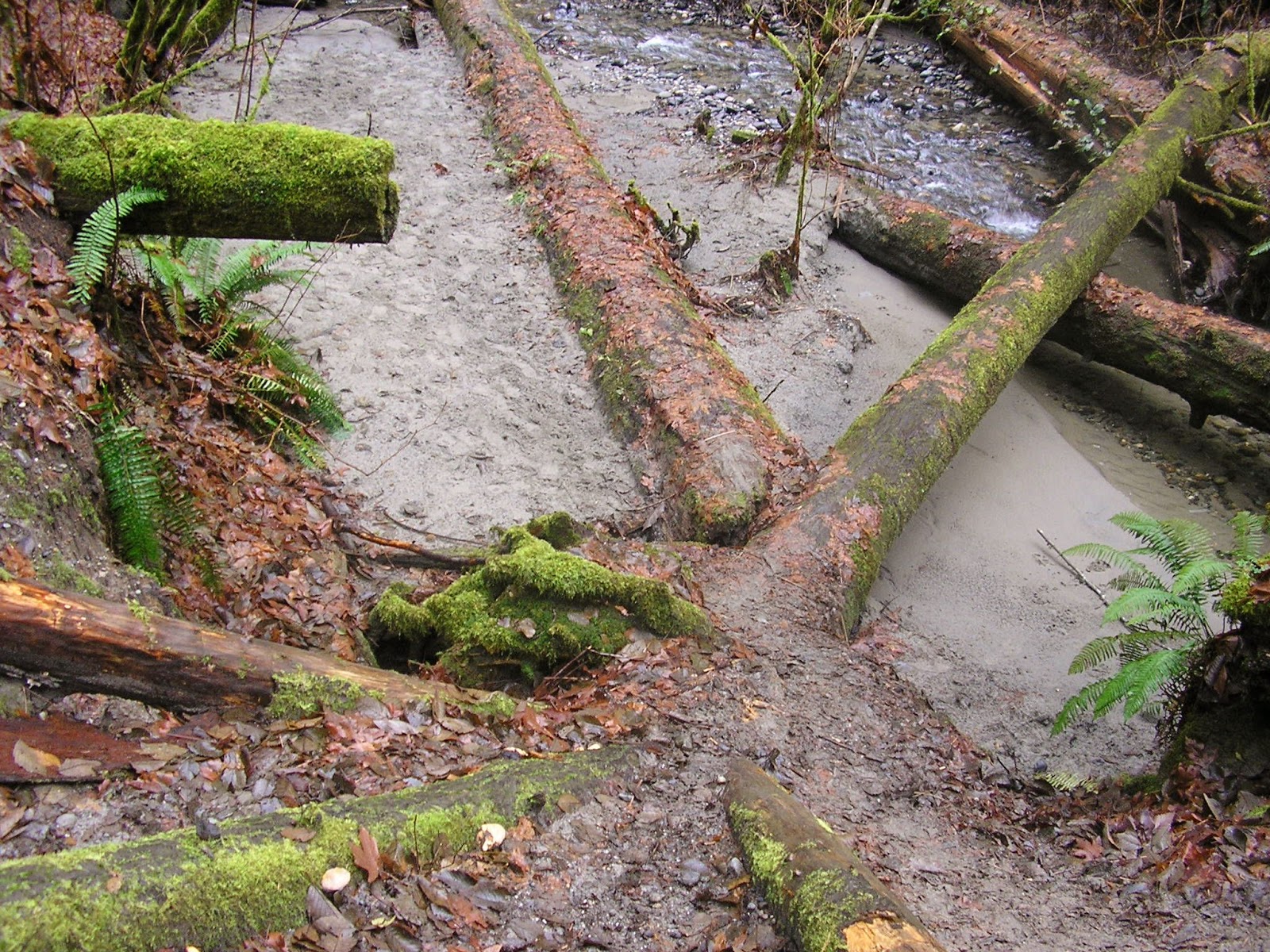
As for environment, I'd harvest from this sweet little, woodland. I used to run these trails back in Cross Country. Here is a nice, historical article about the park: http://en.wikipedia.org/wiki/Boeing_Creek And atleast one review on Yelp recommends the park for smoking pot and harvesting Indian Plum (not the time of year for that one). But most of all how could I say no to this beautiful log formation?


I saw one plant with enough abundance and large leaves just perfect for a salad. But I didn't know what it was. The book I had with my demonstrated no similar pictures. No answers.


Now King County has a great archive of "noxious weed photographs" http://www.kingcounty.gov/environment/animalsAndPlants/noxious-weeds/weed-identification.aspx for people like me without a mentor to follow. Though they are largely organized by flower color and now is not this plant's time of year for flowers. You can send them your photos though through email and they will help you identify it.

Needless to say my ITEMs weren't checking out so I left the park with only a few photographs.

Jasmine Dream Medicine

I am drinking Jasmine tea as I write this.

Herbalist Corinne Boyer came into my dream last night with jasmine berries like a gift from God. Before I went to bed I decided I wanted to remember something from my dreams tonight. She had visited our community house and stayed the night. We'd had a huge feast and I was in the kitchen the next morning taking care of a huge pile of dishes. She was attending to my friend Desiree who was getting ready to leave for work and came up to me with a jar of granola she'd made. She told me the berries were jasmine and blueberries. The jasmine was a pink berry. I looked these plants up online because other than knowing blueberries are "superfruits" antioxidants I don't know much about them.

Jasmine is in the olive family (Oleaceae) and is valued for it's perfume and incense. It grows in subtropical and tropical zones but has been naturalized in some mediterranean climates. The flower only opens at night. It is more of a ritual flower than medicine - though rituals are a powerful medicine - in marriages, religious ceremony, and festivals. In Thailand they are a symbol for motherhood. They are the national flower in countries such as Indonesia, Pakistan, and the Phillipines. The name is derived from Yasameen ("gift from God") through Arabic and Latin. (Info from Wikipedia...) Check out these beautiful images:


Also the plant is medicinal and is more often used in Women's Health, particularly in Ayurvedic medicine. Some properties include: astringent, antibacterial, antiviral, cooling, bitter. It is said to treat breast cancer, stimulate the uterus, calm nerves and act as an aphrodesiac (probably in aromatherapy). Specifically in aromatherapy jasmine treats depression and is used during childbirth. Because it's said to be an emmenagogue (stimulate blood flow in pelvic area and uterus) an emollient (soothing and softening) and galactagogue (increasing milk supply).

More information: http://www.ageless.co.za/herb-jasmine.htm

Holiday Barter of Herbs

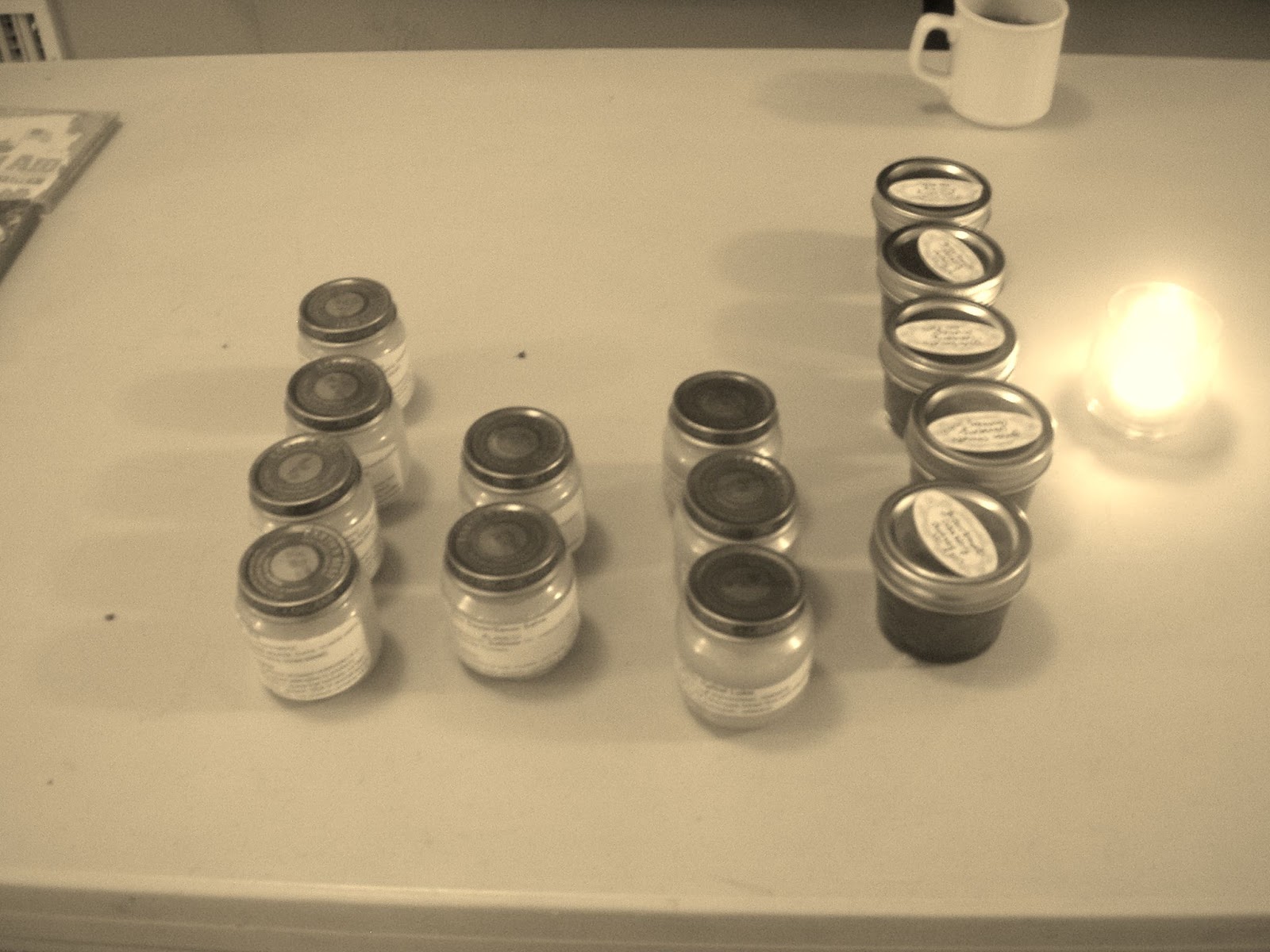
Last night I attended Backyard Barter's Holiday Barter at Sunset Hill Community Center. I was a bit disappointed by the turnout this year but was glad to offer two kinds of salves, an herbal lube (a hot item - I will have to make more of that) and green tomato cranberry chutney.

 
It was an enjoyable Monday night at the end of November. Tables were set up to fill the perimeter of the room. 2-3 people shared a table; I was next to Bridget's conch mushroom forages and elephant garlic from her garden. Candles were lit throughout the room and a woman was in the back offering reiki healing.
 
A woman asked me what I plan to do with these products I make and suggested I consider a booth at a Farmer's Market. Since some legislation just passed that allows people to create products and directly sell them to customers without the required use of a certifed commercial kitchen. I am looking into that a bit more but would have to get really organized. I'm not sure I want to sink costs into producing herbal medicines but I'll stay open to the idea. Perhaps I'll chat up some people at the Fremont Market this Sunday. http://www.fremontmarket.com/FAQ_2010.html

Putting the Garden to Bed?

Went to a workshop at Swanson's last Saturday about preparing garden beds for winter. Besides the garlic and other herbs we will not be growing food here. Most of the beds will have cover crop (Faba Beans and Austrian Pea). Other than that I'm collecting the falling leaves to place down as mulch. The mulch will help protect the soil from erosion. So far the rains have been exposing rocks, which has been good to remove from the beds. Better not to encourage too much erosion though. I wonder how long the leaves will last before they decay though.


I wonder if we should transplant the catnip and other herbs in pots. They say it's better to have plants in the ground rather than in pots, which may not survive deep freezes. What will we get this winter?
 
 
Here is a nice little chore list for preparing winter: http://gardening.about.com/od/fallinthegarden/a/NovGarden.htm?nl=1
 
This is the worksheet Swanson's provided last Saturday: http://www.swansonsnursery.com/PDF/1_GENERAL/Putting%20the%20Garden%20to%20Bed.pdf

Herbs With Heart

Poppyswap.com just sent an email out titled "Emotional Herbs" listing products prepared for easing heart pain sure to come in to the winter months. I followed one link to the "Tranquility Tincture" created by Wise Mountain Botanicals so that I can see what ingrediants they are working with. It is a blend of: Lemon Balm, Lavender, Skullcap, Motherwort, and Chamomile. I have these herbs sitting in jars right now that I may as well turn into a tincture. Many of the folks I'm talking to right now are having a hard time emotionally, just like I am. A gift just in time for the holidays.

Herb Digest has been showing posts lately regarding Hawthorn. I went to a workshop recently about the connection between Hawthorn and the heart. It's right there in the rhyme. I recently picked up Traditional Medicinal's "Heart Tea" because it was on sale at PCC for $1. Unbelievable. It's a blend of Hawthorn and Hibiscus, and when steeped produces a beautiful red color. Besides that I have a little bag of Hawthorn berries I've been saving to brew in a kombucha tea.


I am particularly interested in Hawthorn for strong cardiovascular health because heart disease runs on both sides of my family - but also for it's capacity in emotional healing. Hawthorn is said to relax the arteries, stimulating healthy blood pressure. It also acts as an antioxidant and works synergistically with the body's Vitamin E levels. Apparently in experimentally-induced heart attacks in animals, as well as in animals fed high-cholesteral diets, hawthorn use has been shown to protect the liver (aiding detoxification) and to reduce cholesterol levels by 23%.

Here is an article put out by Science Daily regarding the physiological affects of Hawthorn use: http://www.sciencedaily.com/releases/2008/01/080122203321.htm

If the body and mind are intimately connected, then a heart relaxant must certainly help relax one's emotions. I am experimenting with this on my self right now. How is this plant different from the herbs in the Tranquility Tonic or something like St Johns Wort?

Celebrating Water

"Let there be work, bread, water and salt for all." -Nelson Mandela Happy World Water Day! March 22 People are celebrating a...