Rose Medicine

Recently published Herbal Goddess by Amy Jirsa explores the intersection of teas, potions, salves, food, yoga and twelve different kinds of herbs. I find this text inspiring as I consider what 14 herbs are most important to me. One of her prized herbs is Rosa (my chosen name in high school Spanish). I am thinking about rose as I am about to teach a yoga class in a rose garden in a couple days. I will need to arrive a couple hours early to explore all the varieties. Since the garden is maintained by Woodland Park Zoo I imagine they use fertilizers so I won't be harvesting anything for medicine.


Jirsa claims rose petals are sedative, antiseptic, antii-inflammatory and anti-parasitic. Perfect ingredient for a gardeners salve, for wounds, cuts, and abrasions while digging around in soil. If taken internally, rose lowers body temperature and is anti-spasmodic - muscle relaxing. Excellent summer medicine to keep you cool. Go figure it blooms into the summer, indeed nature provides us with what we need at the right time. I now have a whole new understanding of the benefit of creating a rose water spritzer.

Jirsa also talks about "rose magic", where she constructs rituals for bringing love into your life, mending estranged relationships or infertility, manifesting dreams and beauty, as well as inviting peace. I love the possibility for any individual to create their own rituals in relationship to rose, which has so much cultural association such as love, compassion and friendship.

I realize how I designed an entire yoga class for heart opening and breathing exercises, yet how important it will be just to meditate and be among the roses themselves, without thinking of them in terms of medicine, or asking for love to enter our lives. But simply to experience friendship with all the little flowers. How easy it is for me to wrap my head around the medicinal value of plants but forget about being in relation with them.

That being said, I will let rose be a medicine. Susun Weed reminds us many of the fruits we eat are in the rose family: strawberries, raspberries, apples, plums, almonds, all Rosaceae. (All cooling summer foods, which combined could make amazing desserts!) Weed also claims rose petals contain hormonal precursors, which relieve pituitary, menstrual and menopausal problems. This corroborates with Jirsa's book, where she says rose petals are an emmenagogue, uterine tonic and nervine. It's no wonder roses are almost universally considered "feminine". I'd really love to make rose petal honey soon.

Basil & Nettle


We are waxing near full moon again, Sunday, May 3, 8:42 PM PDT. Fortunately for me I have both women's group on Sunday and social dance in the evening to explore moon energy. This month happens to be in the constellation Scorpio. I generally view these types of associations to be more mythology than anything else, but as I pull up various websites regarding herbs and Scorpio, I notice basil is a constant. Luckily something found at the farmers market!

Garden Witchery regards Scorpio herbs as: catmint, basil, sage, catnip, honeysuckle, nettle, onion, coriander, garlic, wormwood, and elder. And the area of the body to focus on is the genitals. I think about people I know dealing with reproductive health issues and want to consider medicines that might work from this list of herbs. 

Reading into the phytopharmacology of basil claims basil reduces blood clotting and lowers blood pressure. Women sometimes take basil before and after childbirth to promote blood circulation and the flow of breast milk. Not many studies have been undertaken but some demonstrate antibacterial, antimicrobial and spermicidal effects. If this is valid some kind of vaginal cream or salve may be created for treating STDs, HPV or yeast infections. In that case a strong antibacterial and antiviral could be added to enhance the potency (I am thinking garlic and onion). 

Another plant I am curious about is nettle, which is so abundant this time of year. Nettle is highlighted in an article "Women's Herbs" for it's value as a nutritive, for the entire body, bones, blood, brain, breast milk. As a whole body tonic it serves as a "fertility herb" -- whether or not you are trying to become pregnant you might make your body fertile for life. A basil nettle tea could be delicious. 

I love how I never thought of using these herbs for reproductive health until full moon in Scorpio came around when I happened to have women's group scheduled.


Woodsorrel

A friend who runs Seattle Native Plants Nursery bestowed a woodsorrel plant at our recent community potluck. I transplanted this into a pot with garlic, though I am not sure how much they are enjoying each other. A fun experiment I suppose.


Oxalis is a wild edible with - you will not be surprised - high oxalic acid content. Other plants with a lot of oxalic acid include: chives, parsley, purslane and spinach, each which contain around a gram. Some scientific studies have explored the effect of oxalic acid intake. Overconsumption is linked to joint pain, kidney stones, and kidney failure -- due to the leaching out of calcium from the body. Toxicity may be mitigated by applying heat (steaming, etc), drinking plenty of water, or consuming such foods alongside calcium-rich foods. This is great example of natural toxicity found in a healthy food. Toxicity may not be escaped, but at least it may be moderated.

For what reason does nature provide oxalic acid? Other research suggests oxalic acid may be anti-cancer: patients diagnosed with cancer show low levels of oxalic acid in their blood. However this may only be a correlation. Perhaps other nutrients found in spinach and beet greens explain anti-cancer effects, rather than the actual oxalic acid -- for example the presence of antioxidants.

There seems to be a consensus, whether in support of oxalic acid or not, that it is unwise to avoid it. Not only do green veggies have many benefits that outweigh their natural toxins, other sources of poisons are much worse. If you are going to avoid something, perhaps avoid alcohol, caffeine or tap water. Also avoid overconsumption of technology or home appliances like microwaves.

In the meantime I am not sure what to do about "Woody". I feel weird about keeping this plant in a pot when it prefers the wild, so I will keep a close eye and make adjustments as necessary.

P-Patch

I am back at Shiga's Garden after several years of hiatus. The community garden is closing in November, which makes a convenient short term commitment for my ever shifting life circumstances. In the meantime I can garden on lunch breaks.


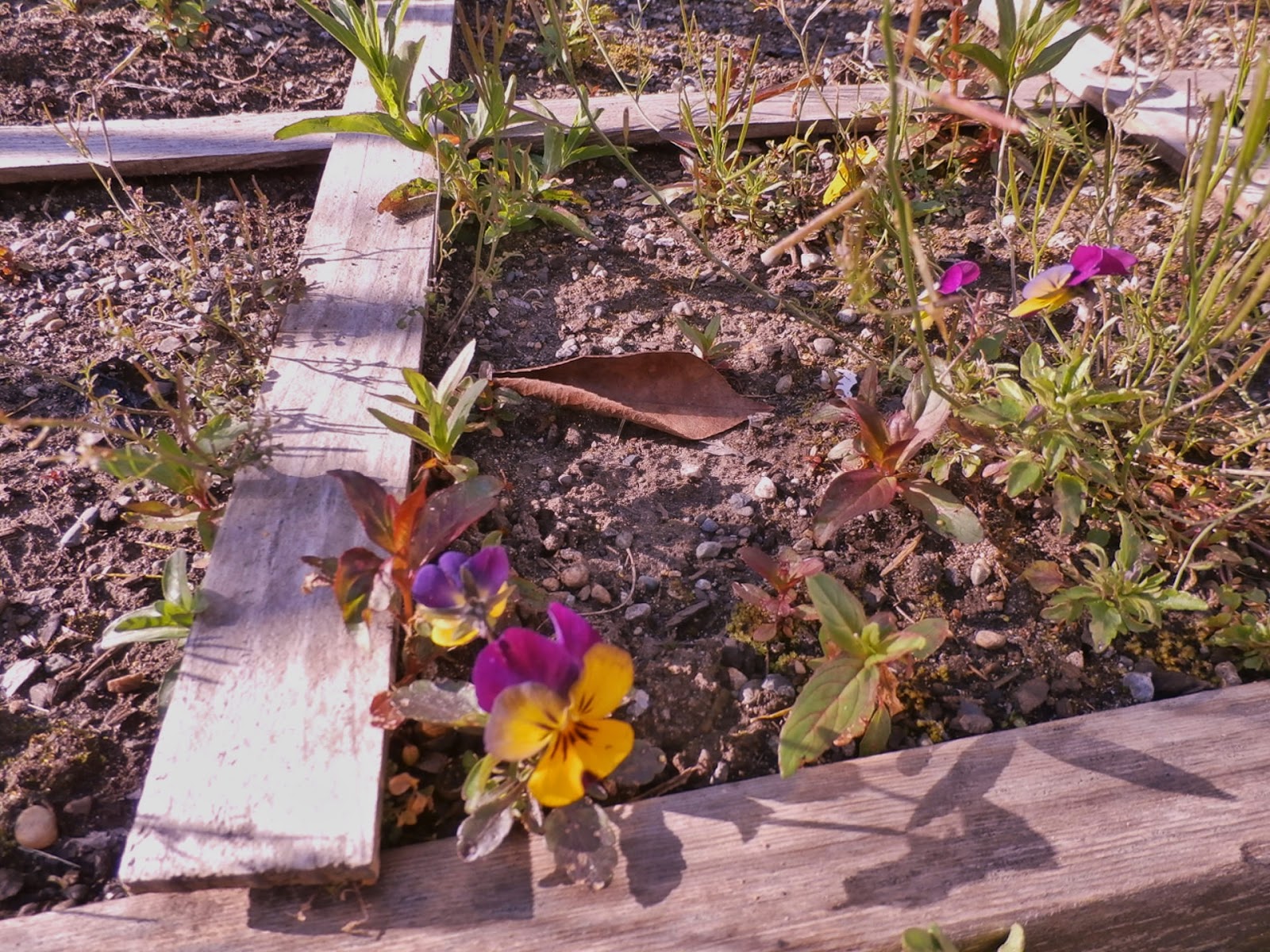
The previous gardener left behind chard, strawberries, volunteer raspberries, rhubarb and violas - which I now get to harvest. Perhaps I will make strawberry raspberry rhubarb pie for an upcoming community potluck! Rhubarb is harvested earlier than the berries, so I may make a sauce to freeze for now.


Also feeling grateful for the structure already in place at the garden. Tools available in the community shed, as well as climbing apparatus for growing peas. I do not have to carry anything to the garden except seeds, which creates ease for simply showing up and doing work. Though I barely have time to for this little project, I need practice in growing food; re-prioritizing will be worth it. Wonderful learning ahead.


Bindweed Medicine

I decided each time I enter the garden I must start with a morning glory walk. Yesterday I pulled a bucket-full. Once, I heard a bit of plant wisdom: one should not pull any unidentified weed. Better to have more intimacy with one's microcosm before going through and changing things. I have a long ways to go before I can truthfully follow such guidance.


Recently I came across the book Invasive Plant Medicine by Timothy Lee Scott, who is an acupuncturist and herbalist living in Vermont. He dedicates a couple chapters to the politics of "invasives", one which is titled "The Intelligence of Plants". He discusses 24 specific plants including barberry and dandelion -- a couple of my favorites -- blackberry, english ivy and scotch broom - restoration ecologist's nightmares - and bindweed - the gardener's bane.

I am fascinated by this book's portrayal of bindweed and now I don't know what to believe! I wonder if I should experiment with medicine making or what.

Convolvulus arvensis of the Morning Glory family, came to North America in the 1730's, and was sold as an ornamental, medicinal plant. In TCM no species have ever been used. In Ayurveda, a couple species have been used as a brain tonic, tranquilizer, blood purifier, for uterine bleeding, ulcers and venereal diseases. In Western medicine, bindweed has been used for internal bleeding, fevers, as a purgative and laxative.

Contemporary pharmacology regards bindweed as a purgative, anticancer, anti-inflammatory, antidiabetic, cholagogic (bile stimulant) and tranquilizer. Studies have demonstrated the plant's efficacy in reducing tumor growth, decreasing the absorption of carbohydrates in the intestines, reducing different types of stress, and as antimicrobial.

Beyond the human body, bindweed serves in phytoremediation! It cleanses chromium, copper and cadmium from soil. It can survive areas full of heavy metals and assists in the degradation of fuel oil - for example in the Prestige Oil Spill of 2002. Calystegin compounds found in the roots feed rhizosphere bacteria with carbon and nitrogen.

Considering the ever deepening toxicity of our planet, plants like these we will need to turn to and honor for their ability to adapt. I can only wonder at the power of all these other plants in the book, the ways they serve us without our even knowing how to identify them outdoors. Our relationship to bindweed will surely shift in the time to come. For one, I need to reconsider merely stuffing them in the yard waste bin.


Spring Cleanse

In time for Full Moon March 5, Spring holiday March 21, and the reality of an early Spring I am contemplating safe cleanses to organize for myself beyond the intake of herbs -- to address body-mind and mind-heart. I happen to be serving at a vipassana meditation retreat March 5-8, which is perfect timing.

First of all I need to follow up on the ideas I explored with "purity herbs" giving preference to bitter tonics, liver tonics, and alteratives - particularly of plants naturalized in Seattle. I plan to drink a decoction of barberry, chicory, dandelion, oregon grape, burdock and yellow dock as often as possible - if not daily. Also making a tincture of these plants with brandy (pictured here).


In Vasant Lad's book, Ayurvedic principles for staying balanced in Spring involve reducing heavy, inflammatory, congestive foods (like dairy and various forms of protein) and increasing bitter, astringent foods and herbs, as well as juice fasts. This would be the perfect time of year to explore a raw food cleanse (but keep it simple). Lad also promotes taking ginger fennel tea and morning walks. Personally, I am aiming for 70 percent fresh, preferably in-season produce like leafy greens, nettle, lettuce, and so forth. Because I am so fortunate to buy from the store I have many more options before me. It can be really hard to lay off comfort foods but it is worth it for stronger health.

An important question is, what is the point of detoxification, or what is being cleansed out of the body? Another book I recommend is Balance Your Hormones, Balance Your Life by Claudia Welch (De Capo Press, 2011). Welch claims hormonal balance is the mirror that reflects optimal health, because imbalance is the first stage of disease. Toxic buildup, or ama in Ayurveda, which derives from sluggish digestion and environmental toxins, will manifest as chronic inflammation, digestive/elimination problems, exhaustion, and so forth. Or simply "unwholesome" particles interfering with vitality of tissue states, which may produce countless symptoms. Detoxification opens blocked channels allowing deeper ama to leave the body.So not overeating, and only eating when hungry; eating fresh, whole foods; paying attention to what you are eating while you are eating. Gentle exercise, meditation, Sleep, herbs to encourage restful sleep, herbs to tonify digestive and eliminative organs. herbs to infuse massage oil for self massage. All wonderful self care practices.

Why bitter and astringent? Bitter compounds, such as iridoids and sequiterpenes,stimulate the gall bladder and liver and therefore digestion. And depending on the plant, may be anti-microbial, anti-inflammatory, hypotensive, sedative, analgesic, laxative, anti-tumor and antibiotic, Astringent compounds expel excess fluid from tissues like a diuretic, enhancing cell wall strength to withstand foreign particle invasion. A way of purifying cells through the body. Both TCM and Ayurveda recommend avoiding too much bitter or astringency which may dehydrate the body - so my heavy preference for these tastes will not last beyond a couple weeks.Through it all I am trying to stay well hydrated.


Red Clover

Over the last couple weeks immunity in my upper respiratory cavities compromised. Illness lingers because I thought I was not sick enough to rest more - and after I stayed out late swing dancing, I came home with the beginnings of bronchitis. The whole illness has been confused, swinging from throat irritation to congestion in the nasal cavities, to slow, heavy lung activity. I was not sure whether I was experiencing allergies or a cold. Today I called in sick to work, so I may rest, walk in the sun, and drink fluids.

In case I am dealing with mild allergies from onset of early spring (camellias flowering two months early) I am drinking tea with red clover, red sage and stinging nettles. Red clover, Trilfoilium pratense, is used for cancer prevention, indigestion, high cholesterol, whooping cough, cough, asthma, bronchitis, and sexually transmitted diseases (STDs). Red clover is also a source of nutrients including calcium, chromium, magnesium, niacin, phosphorus, potassium, thiamine, and vitamin C (a nutritive). It appears to be a common ingredient in many herbal flu blends described on the internet. Red sage, Salvia officinalis is carminative, anti-spasmodic, anti-microbial, astringent, and anti-inflammatory. This may help tonify upper respiratory cellular function, while fighting any viruses present and soothing inflamed tissue. With phenolic acids and flavonoids, red sage is mildly antibacterial and antioxidant as well. 

Stinging nettle is an astringent, diuretic, tonic, antispasmodic/anodyne (pain killing), rubefacient, styptic (stops bleeding), anthelmintic (expelling worms), nutritive, alterative, anti-rheumatic, anti-lithic/lithotriptic, haemostatic, stimulant, expectorant/decongestant, febrifuge (reducing fever), kidney depurative/nephritic, galactagogue, hypoglycemic, and anti-histamine. A lot of stuff! Since it is also a diuretic - and I have been taking more of these lately - I need to be mindful to consume extra water. Too much drying action has been interfering with my ability to move congestion out of my system, and I have felt a simple need to drink water constantly. I always know an infection is present when I feel dehydrated despite drinking a normal amount of water. As an astringent,tonic, alterative,expectorant, and febrifuge - as well as being nutritive - perhaps I should just avoid food and drink stinging nettle tea all day.

***

Lunar new year is in a couple days and to honor that I started a new tincture with herbs a friend mailed me from Colorado. He sent red clover, goldenrod and hops. All plants I can harvest in my home town but somehow they sound more delicious from another state, handpicked by a friend. 


Tinctured together the plants are anti-inflammatory and diuretic. Goldenrod and red clover are good for upper respiratory ailments like allergies, asthma, cold and flu, bronchitis and cough. Combined with hops, humulus lupulus, which is tonic, nervine, diuretic and an anodyne --  the anxiety of being sick may be reduced as well as general aches and pains, and flushing illness out of the system. At least I will have the tincture prepared for next time.

Celebrating Water

"Let there be work, bread, water and salt for all." -Nelson Mandela Happy World Water Day! March 22 People are celebrating a...